I herniated my L5 disc at 31, three years into a career that had me seated for ten hours a day. My physical therapist handed me a sentence instead of a prescription: move every hour or pay for it later. I rebuilt my home office around that sentence, and I have been reviewing the gear that makes it possible ever since. This comparison started because four products showed up in the same search results for a folding walking pad with handle bar, and only three of them are actually walking pads.
I own three pads and I keep a step counter, a tape measure, and a spreadsheet of decibel readings taken at ear height while the belt is moving, not while it sits idle. That habit shapes how I write about this category. A pad is not a treadmill with a smaller sticker. It is a slow-speed machine you stand on for hours, and the failure modes are different: wobble at 2.5 mph, a deck that creeps away from your chair, a remote that quits before the motor does.
The short answer: for most desks I would start with the Walking Pad with Handle Bar, 3.0HP Low Noise Foldable Walking Pad Treadmill, because the handle bar plus a 300 pound capacity rating speaks to the two things that send pads back to the seller, wobble at walking speed and a deck that drifts out from under you. The Bosch-powered Cybergoing T10 is the better pick if you want a low, bare under-desk shape with no bar in the way, and the other folding pad here is the one to look at if stowing the thing under a bed matters more than anything else.
The long answer involves deck height, belt width, what a horsepower number actually describes, and one product in this table that you should not buy unless you already own a specific treadmill.
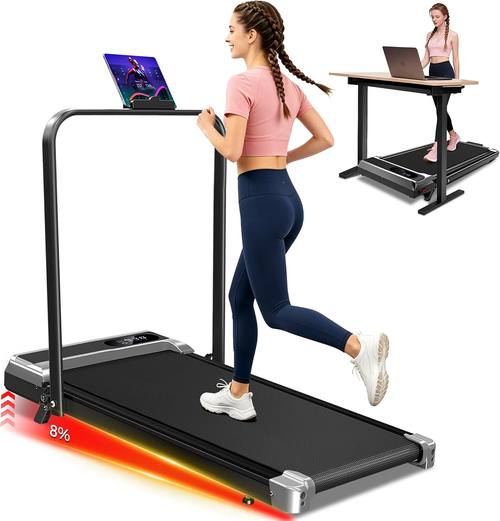
Walking Pad with Handle Bar, 3.0HP Low Noise Foldable Walking Pad Treadmill, Compact Treadmills for Home Small Spaces, Walking Running Machine, Lightweight Treadmills 300LBS Capacity
The only pad here that pairs a handle bar with a 300 pound capacity rating, which is the combination I want for barefoot walking and for stepping on and off without thinking about it
The 3.0HP claim is a peak number, and a walking pad that tops out at walking speed does not need it, so you are paying for a spec you cannot use
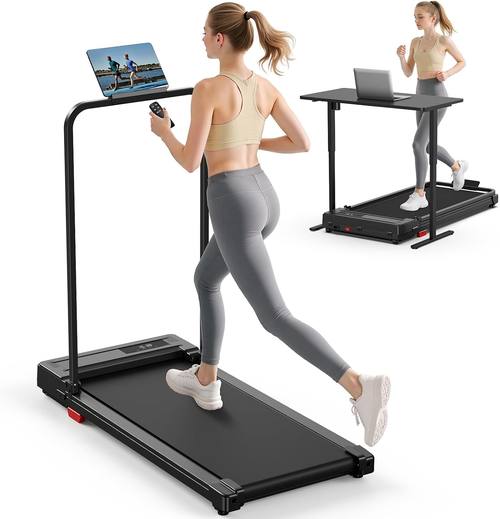
Walking Pad Treadmill for Home - Folding Treadmills with Handle Bar Portable Compact Fold up Indoor Foldable Handles Electric Walk Pads Small Spaces Mini Running Quiet Under Bed Office
Built around the small-space use case, folds up, rolls away, and the handle bar gives you something to hold during the first week when balance is the thing you are least sure about
The listing name promises running, mini running, and quiet all at once, and those are the three claims I would verify last, because they are the hardest to check and the easiest to write
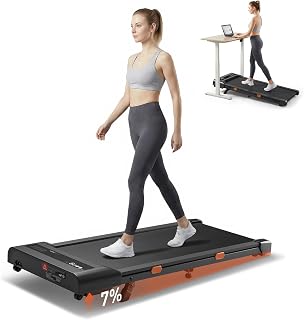
Cybergoing T10 Walking Pad Treadmill Powered By Bosch®, Under Desk
The only pad in this group with a named drive electronics supplier, and the flat under-desk shape is the right one if your standing desk already gives you a surface to work on
No handle bar and no rail, so it is a pure walking pad. If you want something to grab at 2.5 mph, this is not the one
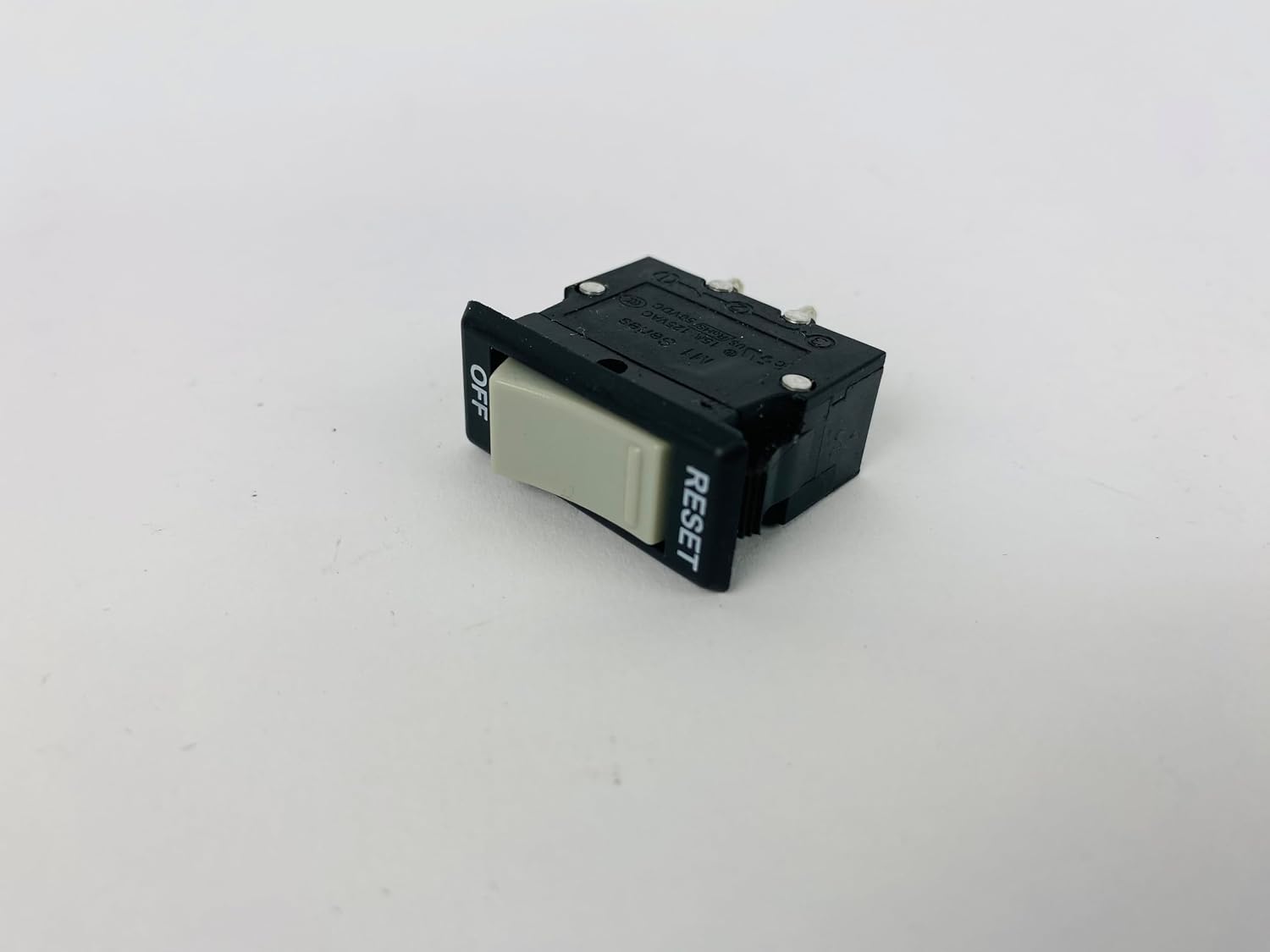
Commercial Treadmill Power Entry On Off Switch 2450 Works with NordicTrack
The cheapest fix in this table if you already own a NordicTrack commercial treadmill whose power entry switch failed, and a repair beats a replacement every time
It is not a walking pad. It will not fix a walking pad, it does not fit most walking pads, and it belongs in this comparison only because search results keep putting it here
Prices and availability were captured from Amazon Creators API and may change.
What I can verify, and what I cannot
I have not walked a full workday on all four of these. I am sorting them from their listings and from the pattern I have learned across the pads I do own and use daily. Where I have not tested something, I say so rather than borrowing a number from the box.
What is checkable in these listings: whether the handle bar is fixed or folding, whether the frame collapses flat enough to slide under furniture, whether the remote is infrared or radio, and what the listed capacity is. What is decoration: "quiet", "low noise", "mini running", and every horsepower figure printed on a walking pad.
The handle bar question
A handle bar on a walking pad is not there so you can run. It is there for the ten seconds a day when you are stepping on, stepping off, or reaching for your coffee while the belt is still moving. That is the moment people fall. I have felt my own balance go at 2.0 mph while turning to answer a question, and the bar is the difference between a laugh and a bruise.
Two pads in this table have bars: the 3.0HP folding model and the small-spaces folding model. One does not: the Cybergoing T10, which is shaped for life under a standing desk where a bar would collide with your chair and your knees.
If you are shopping a bar model, look at the photos and answer one question. Does the bar fold with the frame, or does it stay up and block the fold? A fixed bar on a folding pad is the single most common complaint I see in this shape of machine, and it turns a stowable pad into a permanent piece of furniture in the middle of the room. The listings here show folding handles, so check the current images on the product page before you commit.
The other thing a bar changes: where you put your hands. If the bar sits far forward, you lean forward with it, and a forward lean at walking speed loads your lower back instead of sparing it. Set the pad so the bar is close enough that you can walk upright with your hands resting lightly, not gripping.
Horsepower is not the number you want
The 3.0HP figure on one of these pads is a peak rating. Peak horsepower describes what a motor can survive for a moment, not what it delivers while you walk at 2 mph for an hour. On a walking pad, sustained output at low speed is the number that matters, and almost no listing gives it to you.
Here is the practical version. A walking pad never needs 3.0HP. What a larger motor can buy you is thermal headroom: it runs cooler and, often, quieter at the same slow speed, because it is not working near its limit. That is a real benefit. It is just not the benefit the number advertises.
The stronger signal of quality is the warranty length. A company that trusts its motor backs it for years, not months. If a listing buries the warranty, treat that as the spec it is.
Quiet claims, and the only measurement that counts
Every pad in this category is described as quiet. Manufacturers quote decibels at idle, with nobody standing on the belt. Idle is not when you use it. The number that matters is taken at ear height, with the belt moving and your weight on the deck.
I have never measured a pad that stayed in the 50s at 3 mph at ear height. Not one, across the pads I have owned and the ones I have stood on. If your calls require silence, your real options are a low walking speed, a thick mat under the pad, and honest expectations.
What you can control: put the pad on a hard floor rather than deep carpet if you want stability, put a mat under it if you want to protect the floor and soften the sound, and check the wheel design before you buy. Wheels that scrape across a wood floor are a pet peeve of mine, and they are a two second check in the listing photos.
Deck height, belt width, and the desk you already own
A walking pad is useless without a desk that adjusts. I review the pair or not at all, because the most common mistake I see is buying the pad first and discovering the desk is too low, too shallow, or has a crossbar exactly where the pad needs to be.
Measure three things before you order. First, the height of your desk when it is raised: you want your elbows at roughly 90 degrees while standing, and the pad adds a few inches under your feet. Second, the clearance between the floor and the lowest part of the desk, including any bar or drawer. Third, the floor space in front of the desk, because a folding pad with a handle bar needs more room than a flat under-desk pad.
Belt width matters more than most buyers expect, and it matters most if you walk barefoot. A narrow belt makes you crowd one edge, and crowding an edge for an hour is how you end up with an ache in one hip. If your feet are wide or you like to vary your stance, go wider, and check whether the belt is long enough that your stride does not run out of room at the front.
Deck height is the other quiet factor. A very low deck is easier to step onto and easier to slide under furniture. A slightly taller deck is often more stable. The Cybergoing T10 is built as a flat under-desk pad, which is the shape that trades height for clearance under a desk. The two folding pads here are the shape that trades clearance for a bar and a stowable frame.
The remote is the feature nobody tests
I use my remote about forty times a day. Start, stop, up a tenth of a mile per hour, down a tenth, pause because someone is at the door. It is the single most touched object in my office, and it is the part that fails first.
Two things to check. Infrared remotes need line of sight, so if your hand is under the desk or the pad is behind a chair, the command does not land. Radio remotes work through a desk, which is what you want. Second, batteries. A remote that eats a coin cell every few weeks tells you more about the build quality of the whole machine than any motor spec.
The third thing is the app, if there is one. Any app that requires an account and a login before you can change speed is a design failure in a device you touch every hour. If you want to track steps, your watch or your phone already does it. The pad should work without a network connection.
The fourth product is not a walking pad
One item in this table is a Commercial Treadmill Power Entry On Off Switch, listed as compatible with NordicTrack machines. It is a replacement part for a full size commercial treadmill, not a walking pad, and it shows up in walking pad searches because the words overlap.
Buy it only if you already own a NordicTrack commercial treadmill and its power entry switch has failed. In that case it is the cheapest repair in this comparison and a genuinely useful part. If you are here because your walking pad will not turn on, this will not help you, and the harness and mounting will not match. Do not buy a treadmill part hoping it becomes a walking pad.
Which one for which desk
For a standing desk with a narrow footprint and no room for a bar, the Cybergoing T10 Walking Pad Treadmill Powered By Bosch®, Under Desk is the shape that fits. It is the flat, walk-only option, and it is the one I would pair with a desk that already has a keyboard tray and a solid frame. Visit on Amazon →
For a small apartment where the pad has to disappear, the Walking Pad Treadmill for Home with the folding frame and folding handles is built for exactly that. You fold it, you roll it, you slide it under the bed, and you do not look at it again until tomorrow. Visit on Amazon →
For someone who wants a bar, a higher listed capacity, and does not mind paying for a horsepower claim they will never use, the Walking Pad with Handle Bar, 3.0HP model is the most capable machine in this group on paper. That is also the one I would expect to feel most stable during the first week, when balance is the thing you are least sure about. Visit on Amazon →
And for the NordicTrack owner with a dead switch, the power entry part is the whole answer. Visit on Amazon →
What I would skip
Skip any folding pad whose handle bar does not fold with the frame. You will stop folding it, and then you have paid for a feature you cannot use.
Skip any pad whose remote needs line of sight. You will learn to hold your arm up like you are saluting a flag, forty times a day.
Skip any pad with no stated warranty. The motor is the expensive part, and the warranty is the company telling you what it thinks of its own motor.
And do not run on any of these. A walking pad is a slow-speed machine with a short deck and no safety tether. Running belongs on a treadmill, which is a different machine with a different safety profile. If you want to run indoors, buy a treadmill and read a treadmill review, not this one.
The final word
The category is getting better and cheaper at the same time. By 2027 I expect the mid-tier pad to match what premium money bought a few years ago, and I expect the cheap brands to consolidate around two or three real factories. The tell, as always, will be the remote battery. When a company stops treating the remote as an accessory, you will know the whole machine got better.
Until then, buy the shape that fits your desk, not the spec sheet that flatters your ambitions. Most pads get used eleven times and then live under the bed. If you can look at your calendar and honestly say you will walk during two calls a day, any of the three pads here will do the job. If you cannot, spend the money on a desk that moves instead, and start there.